2026 Best Ways to Remove Stubborn Eye Makeup Safely?

Time:2026-10-11 Author:Sophia
0%

Removing waterproof mascara, long-wear eyeliner, and glitter shadow should not feel like a battle with your eyelids. Yet many people still scrub until their lashes bend, their skin stings, and tiny black flakes remain near the lash line. This guide examines how to remove stubborn eye makeup safely without treating delicate skin carelessly.

The most reliable approach combines time, gentle pressure, and a suitable remover. Oil-based or dual-phase formulas often loosen waterproof pigments more effectively than ordinary cleansing water. Hold a soaked cotton pad over the closed eye for several seconds. Let the product soften the makeup before wiping downward, rather than rubbing side to side. A clean cotton swab can reach the inner lash line, but it should never touch the eyeball.

Dermatology and eye-care guidance generally favors fragrance-free products, clean hands, and careful contact-lens removal before cleansing. Products should be replaced when they smell different, separate unusually, or pass their recommended use period. Sharing mascara is risky and should be avoided. Small details matter.

Still, no routine suits everyone. Sensitive eyes may react even to products labeled gentle. Stop immediately if burning, swelling, persistent redness, or blurred vision appears, and seek professional medical advice when symptoms continue. I also recognize that “natural” does not always mean safer; plant oils and essential oils can irritate the eye area. This 2026 guide compares practical techniques, common mistakes, and realistic alternatives, while acknowledging an imperfect truth: removing makeup safely may take longer than removing it aggressively.
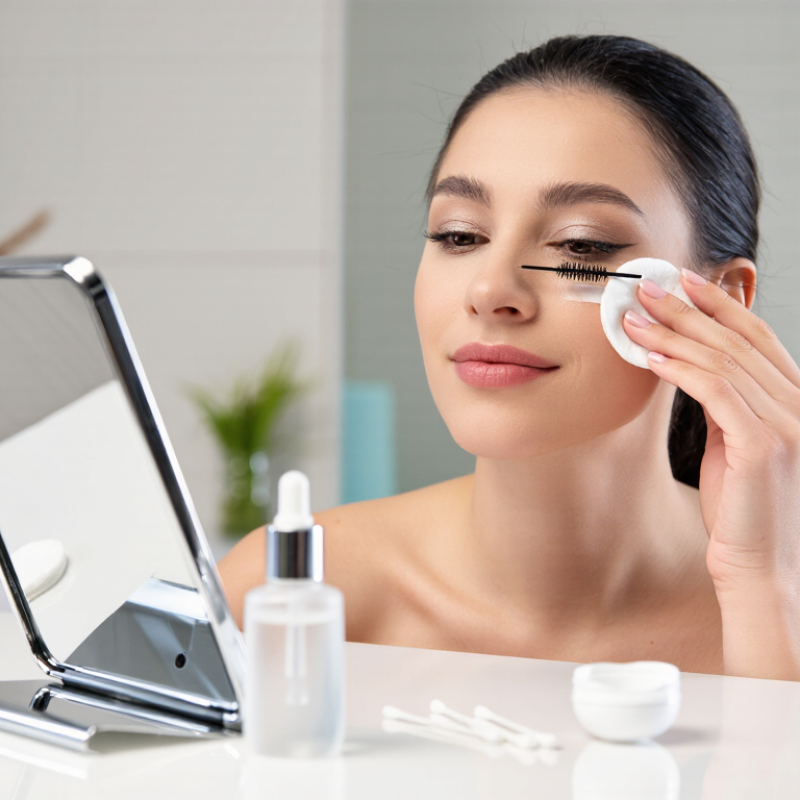
2026 Best Ways to Remove Stubborn Eye Makeup Safely?

Understanding Why Stubborn Eye Makeup Requires Gentle Removal

Stubborn eye makeup needs gentle removal because its pigments often resist water. Waterproof formulas can cling to lashes, the eyelid margin, and tiny skin folds. Rubbing harder may feel efficient, but it increases friction around delicate tissue. That can irritate the skin and disturb the tear film.

The TFOS DEWS II report states that dry-eye symptoms affect roughly 5% to 50% of adults worldwide, depending on the population studied. This matters because repeated rubbing may worsen discomfort in already sensitive eyes. Remove contact lenses first. Then place a warm, damp cotton pad over closed eyes for 20 to 30 seconds. Let the product soften. Do not scrub.

Use a clean pad and move downward, then outward. A cotton swab can reach the lash roots, but never scrape the waterline. The U.S. Food and Drug Administration advises avoiding contaminated eye cosmetics, sharing products, and using items that change smell or texture. Replace eye-area products according to their safety guidance. Even careful routines are imperfect. I sometimes rush one eye and notice more redness afterward. That small mistake shows why patience matters. If burning, swelling, discharge, or persistent blurred vision appears, stop immediately and seek professional eye-care advice.

2026 Best Ways to Remove Stubborn Eye Makeup Safely

Stubborn eye makeup often contains waxes, oils, film-forming polymers, or waterproof pigments, so rubbing harder can increase irritation and eyelash loss. A gentle removal sequence works better: wash your hands, use an eye-safe remover, let it dissolve the makeup, wipe softly, and rinse away residue.

Choosing Safe Products for Different Types of Eye Makeup

Removing eye makeup safely starts with choosing a product that matches its formula. I used to treat every remover as interchangeable, but that caused stinging and dry, tight eyelids. Waterproof mascara needs an oil-based or bi-phase remover that can dissolve waxes gently. Hold a soaked cotton pad over closed eyes for 10–20 seconds. Use less pressure.

For pencil liner and regular mascara, a fragrance-free micellar or water-based remover may be enough. Choose products with clear ingredient lists and avoid strong perfume near the lash line. If your eyes are sensitive, look for ophthalmologist-tested products, but remember this wording does not guarantee irritation-free use. Remove contact lenses before cleansing. Never share eye products or applicators.

Glitter and long-wear pigments need extra patience. A gentle cleansing oil can loosen particles, while a damp cotton swab helps clean the lash roots. Do not scrape glitter from the eyelid. It can scratch the eye surface. Rinse with lukewarm water if residue remains, then pat dry with a clean towel. Check the product’s opening date and discard it when the smell, texture, or color changes. I still sometimes wipe too quickly, especially after a late night. That is exactly when slower, softer movements matter. Stop immediately if burning, swelling, pain, or blurred vision develops, and seek professional eye-care advice.

Preparing the Eye Area Before Makeup Removal

Before removing stubborn eye makeup, prepare the area instead of rubbing harder. Wash your hands with soap and dry them completely. Remove contact lenses before touching your eyelids. Tie back loose hair, then use a bright mirror to check each lash line. Small details matter. Clean hands reduce the chance of transferring bacteria near the eyes.

Close your eyes and place a warm, damp cloth over them for 20 to 30 seconds. The cloth should feel comfortably warm, never hot. This helps soften mascara, liner, and adhesive residue. Next, dampen two soft cotton pads with a fragrance-free remover made for the eye area. Hold each pad against the closed eyelid for several seconds. Do not drag it immediately. Patience is safer than pressure.

I used to rush this step and often woke with sore, red eyelids. A slower method works better, although I still miss a tiny line sometimes. Move the pad downward along the lashes, then use a fresh corner for the inner area. Avoid scraping dry glitter or pulling attached lashes. If the product feels gritty, add more remover and wait again. Stop if you notice burning, swelling, or blurred vision. Rinse gently with clean water and seek advice from an eye-care professional if irritation continues.

2026 Best Ways to Remove Stubborn Eye Makeup Safely? – Preparing the Eye Area Before Makeup Removal

A practical preparation guide for loosening long-wear eye makeup while protecting the delicate skin around the eyes.

Step Preparation Action Suggested Time Safety Benefit What to Avoid
1 Wash your hands thoroughly At least 20 seconds Recommended
Clean hands reduce the transfer of dirt and microorganisms to the eyelids and eye surface.
Do not begin removal with unwashed hands, especially when wearing contact lenses.
2 Remove contact lenses, if applicable Before cleansing Recommended
Removing lenses helps prevent makeup remover from collecting beneath the lens and reduces irritation risk.
Do not apply remover over contact lenses unless the product instructions specifically allow it.
3 Secure hair away from the face 30–60 seconds Recommended
Keeping hair clear helps prevent repeated rubbing and keeps cleanser from spreading into the eyes.
Avoid tight clips or bands that pull the skin around the temples and eyelids.
4 Choose a gentle, eye-area-appropriate remover Before application Recommended
Products formulated for the eye area are generally designed to remove pigment and oils with less friction.
Use caution
Avoid household oils, harsh soaps, alcohol-heavy products, and products containing ingredients known to irritate you.
5 Check the remover and tools 30 seconds Recommended
Checking the expiry date, smell, texture, and cleanliness of tools helps reduce avoidable irritation and contamination.
Do not use a product that has changed appearance or a reusable pad that has not been washed properly.
6 Prepare lukewarm water and soft pads 1–2 minutes Recommended
Lukewarm water can improve comfort, while soft, low-lint pads help reduce dragging across the eyelid.
Do not use hot water, rough towels, cotton swabs that shed fibers, or abrasive textured pads.
7 Protect the lower eye area with a clean pad Before soaking Recommended
A clean pad beneath the lower lashes can catch dissolved pigment and limit repeated wiping.
Do not place the pad directly on the eyeball or press it into the waterline.
8 Soak the pad before touching the lashes 10–20 seconds Recommended
Saturating the pad helps dissolve mascara, liner, and shadow before mechanical wiping begins.
Do not start with a dry pad; dry rubbing can increase tugging, redness, and lash breakage.
9 Hold the soaked pad over the closed eye 10–30 seconds Recommended
Gentle contact time gives long-wear pigments more opportunity to loosen without aggressive scrubbing.
Do not press firmly, pull the eyelid, or keep the eye open while liquid is being applied.
10 Wipe in the direction of lash growth One gentle pass at a time Recommended
Moving from the lash base toward the tips limits unnecessary back-and-forth friction.
Do not scrub side to side or repeatedly drag pigment across the eye area.
11 Use a fresh section for each pass and each eye As needed Recommended
A clean surface prevents dissolved makeup from being redistributed and supports better hygiene.
Do not use the same dirty pad on both eyes, particularly when one eye is irritated or infected.
12 Rinse away residue and pat dry After makeup is removed Recommended
Removing leftover cleanser and pigment helps reduce the chance of lingering stinging or blocked eyelid margins.
Do not rub the skin dry or leave visible residue along the lash line.
Stop and seek professional medical advice if you experience persistent pain, marked swelling, vision changes, light sensitivity, discharge, or redness that does not improve. If a product enters the eye, rinse with clean, lukewarm water and avoid rubbing.

Step-by-Step Methods for Removing Long-Wear Eye Makeup

Removing long-wear eye makeup safely starts with clean hands, patience, and a suitable eye-area cleanser. Take out contact lenses before cleaning. Close one eye gently. Saturate a soft cotton pad, then press it over the eyelid for 10–20 seconds. This pause helps loosen waterproof pigment and adhesive residue. Wipe downward, following the direction of the lashes. Avoid dragging the skin sideways. Repeat with a fresh pad until little color remains.

For precise removal, use a damp cotton swab along the lash line. Keep the eye closed during this step. Never push residue into the inner corner. Wash the surrounding skin with lukewarm water and a mild cleanser. Pat dry with a clean towel. If burning, swelling, or blurred vision appears, stop immediately and seek qualified medical advice. A small amount of leftover shadow can be safer than aggressive rubbing.

Tips: Work under bright, comfortable light. Hold the pad longer instead of pressing harder. Clean one eye completely before touching the other. I sometimes miss a thin gray line beneath the lashes, even when I am careful. Checking gently the next morning helps, but scrubbing tired skin usually causes more trouble. Replace the cotton pad often. Keep products away from broken or irritated skin.

Aftercare Tips to Protect Sensitive Skin and Eyes

After removing stubborn eye makeup, treat the area as temporarily fragile. A clean, lukewarm rinse can remove leftover cleanser, pigment, and oily residue. Pat the skin dry with a soft, clean towel. Do not drag it across the eyelids. The eye area needs less friction, not more product.

Apply a simple, fragrance-free moisturizer around the orbital bone, avoiding the lash line and inner eyelid. If your skin feels hot or tight, place a cool, damp compress over closed eyes for several minutes. Keep contact lenses out until discomfort has fully settled. Avoid exfoliating acids, retinoids, essential oils, and heavy eye products that night. Less is safer.

I used to rub until every dark mark disappeared. That habit left my eyelids red the next morning. A faint shadow may be leftover pigment, not a cleaning emergency. Wash your hands before touching the area, and use a fresh towel each time. If swelling, pain, persistent redness, discharge, or blurred vision appears, stop using products and seek advice from an eye-care professional. Eye discomfort deserves attention.

FAQS

How should I prepare before removing stubborn eye makeup?

Wash and dry your hands completely. Remove contact lenses and tie back loose hair. Use a bright mirror.

Why place a warm cloth over closed eyes?

A comfortably warm, damp cloth softens mascara, liner, and adhesive residue. Hold it there for 20 to 30 seconds. Never use hot water.

How should I use cotton pads around my eyelids?

Dampen two soft, fragrance-free eye-area pads. Press each pad on the closed eyelid for several seconds. Do not drag immediately.

What movement helps remove makeup from the lashes?

Move the pad downward along the lashes. Use a fresh corner near the inner area. Gentle pressure works better than scraping.

What should I do if glitter or residue feels gritty?

Add more remover and wait again. Avoid scraping dry particles or pulling attached lashes. Patience helps, though a tiny line may remain.

What should I do after removing the makeup?

Rinse gently with clean, lukewarm water. Pat dry with a soft, clean towel. Do not rub across the eyelids.

Can I apply moisturizer after removal?

Apply a simple, fragrance-free moisturizer around the orbital bone. Avoid the lash line and inner eyelid. Less product is safer.

What should I avoid when my eyelids feel sensitive?

Avoid exfoliating acids, retinoids, essential oils, and heavy eye products that night. Keep contact lenses out until discomfort settles.

When should I stop using products and seek professional advice?

Stop if burning, swelling, pain, discharge, persistent redness, or blurred vision appears. Rinse gently and contact an eye-care professional if irritation continues.

Conclusion

Removing stubborn eye makeup safely begins with understanding that the skin around the eyes is delicate and easily irritated by rubbing, harsh ingredients, or repeated cleansing. The best approach is to choose a gentle, eye-safe remover suited to the makeup type, whether it is waterproof mascara, long-wear eyeliner, or highly pigmented shadow. Before cleansing, wash your hands, remove contact lenses if applicable, and gently soften the makeup with a warm, damp cotton pad or soft cloth.

To learn how to remove stubborn eye makeup safely, hold the soaked pad over the closed eye for several seconds, allowing the product to loosen the makeup before wiping downward and outward with minimal pressure. Use a fresh pad for each eye and carefully clean along the lash line without pulling the skin. Afterward, rinse away residue, pat the area dry, and apply a fragrance-free moisturizer or soothing eye-area product if needed. If burning, swelling, or persistent redness occurs, stop immediately and seek professional medical advice.

Sophia

Sophia

Sophia is a dedicated marketing professional with an exceptional depth of knowledge about her company's products and services. With a keen understanding of market trends and customer needs, she crafts insightful blog posts that not only inform but also engage readers, enriching the company’s online......