 Fmo Beauty
Choosing among China’s top 10 lipstick suppliers requires more than comparing shade charts and factory prices. Bleeding often appears as a soft red ring around the lips. It can worsen after coffee, lunch, or exposure to summer humidity. The real question is not only how to prevent lipstick from bleeding. It is also how suppliers control formula balance, packaging, testing, and user instructions.
Professional makeup artist Lisa Eldridge has emphasized the value of defining the lip edge, describing lip liner as a way to create “a clean boundary” for lipstick. That practical idea supports a wider manufacturing approach. Reliable suppliers should test wax structure, oil migration, pigment load, and creaminess. A well-designed liner can create a barrier. A compatible primer can reduce surface slip. A controlled lipstick formula can limit movement into fine lines.
Still, no lipstick remains perfect in every condition. Mature skin, dry patches, facial oils, and high temperatures can change the result. I have seen a smooth swatch become uneven after several hours in a warm room. That detail matters. Buyers should request stability records, transfer tests, ingredient specifications, and batch samples before placing large orders. They should also compare performance on different lip textures, not only on polished studio models. Supplier claims deserve verification. A lower-cost formula may look attractive, yet bleed faster during real wear. The strongest manufacturers explain these limitations clearly and recommend practical steps, including exfoliating gently, moisturizing lightly, outlining the lips, and applying thin layers.
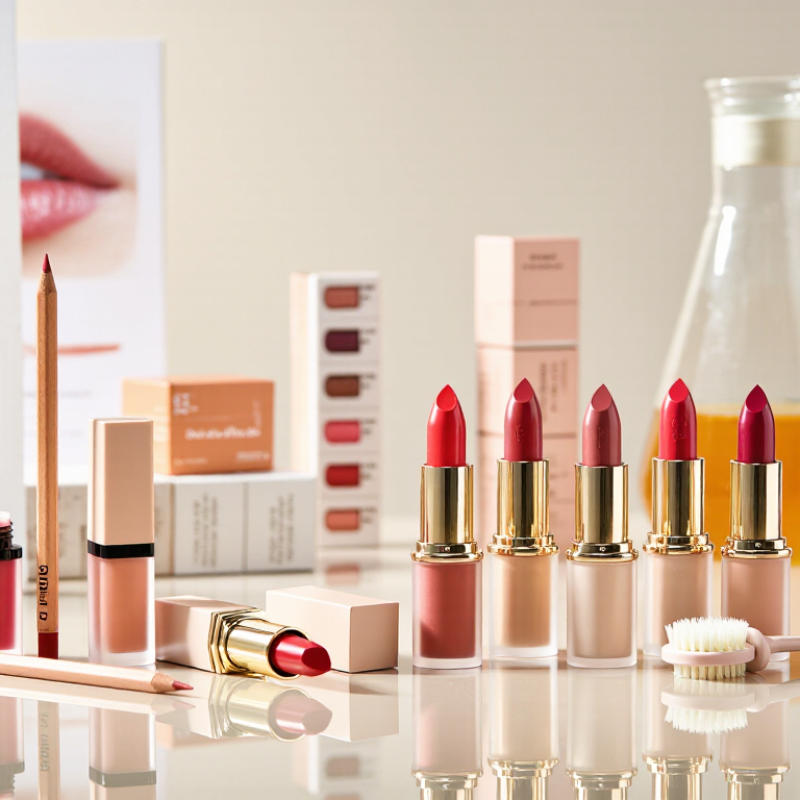
Lipstick bleeding happens when color moves beyond the natural lip line. Feathering looks softer, with fine lines carrying pigment into nearby skin. In formulation reviews, I often see both problems confused. They are not always caused by poor pigment quality.
A soft, oil-rich formula may melt around the mouth’s warmer skin. Excess emollients can reduce structure and encourage migration. Dry lips create tiny cracks, giving color an easy path outward. Lip balm, foundation, or oily food can make movement worse. Fine vertical lines become more visible with age. Even careful users cannot fully hide them.
Product suppliers should examine wax levels, pigment dispersion, and the balance between oils and film-forming ingredients. A lipstick that feels smooth in a laboratory may travel after four hours of speaking. That difference matters. Test samples on hydrated and dry lips, then check the edges under bright light. A tissue press, warm-storage test, and repeated wear trial can reveal weaknesses early. Lip liners and invisible barrier pencils may improve control, but they cannot repair an unstable formula. I have also seen excessive powder reduce bleeding while making the lipstick drag. That trade-off deserves honest review. Good testing is sometimes less elegant than expected.
| No. | Potential Cause | How It Causes Bleeding or Feathering | Typical Warning Signs | Recommended Prevention | Quality-Control Check | Relative Risk |
|---|---|---|---|---|---|---|
| 1 | Excessive oil or emollient migration | Liquid oils can move from the lipstick core into the surrounding lip lines, especially when the formula is too soft or poorly balanced. | Oily surface, color spreading beyond the lip edge, and reduced wear time. | Balance oils, waxes, and structuring agents; select emollients with suitable polarity and compatibility. | Check hardness, oil separation, surface sweating, and color migration after storage. | High |
| 2 | Insufficient wax or structuring system | A weak internal structure allows pigments and oils to move more easily during wear and warm storage. | Soft bullet, deformation during application, visible smearing, or poor pay-off control. | Optimize the wax blend and total structurant level without making the product draggy or brittle. | Measure penetration or hardness, pay-off, break resistance, and heat stability. | High |
| 3 | High ambient temperature | Heat lowers viscosity and softens waxes, increasing the mobility of oils and pigments. | More feathering in hot weather, melting in transport, or an oily film on the surface. | Use heat-stable raw materials and define suitable storage and transport conditions. | Perform elevated-temperature stability testing and inspect the product after temperature cycling. | High |
| 4 | Incompatible oils, waxes, or film formers | Ingredient incompatibility may cause phase separation, pigment movement, or an unstable film on the lips. | Graininess, sweating, uneven color, settling, or inconsistent application. | Conduct compatibility screening and use a properly balanced anhydrous base and film-forming system. | Review microscopic appearance, centrifugation behavior, and accelerated stability results. | High |
| 5 | Insufficient film formation | Without an effective flexible film, pigments can transfer into fine lines instead of remaining evenly on the lip surface. | Color transfers easily to cups, masks, and skin around the mouth. | Use a suitable film former at a validated level while maintaining comfort and removability. | Evaluate transfer resistance, wear time, flexibility, and sensory feel after application. | High |
| 6 | High pigment or lake concentration | Excess pigment can disturb the base structure and may increase dry drag, uneven deposition, or color migration. | Patchy application, strong staining outside the lip line, or visible pigment gathering in creases. | Optimize pigment loading, dispersion quality, surface treatment, and particle-size distribution. | Check color uniformity, dispersion, rub-off, and migration on a suitable test substrate. | Medium |
| 7 | Unstable or incomplete pigment dispersion | Poorly dispersed pigment can agglomerate and separate from the oil phase, producing uneven color and localized bleeding. | Specks, streaks, color variation between batches, or a rough application feel. | Use validated milling or homogenization conditions and control the order of ingredient addition. | Inspect dispersion under magnification and compare batch color, gloss, and texture. | Medium |
| 8 | Application over lip balm, gloss, or skincare residue | Extra oil on the lip surface dilutes the lipstick film and creates a slippery layer that encourages spreading. | Feathering occurs soon after application, particularly over rich lip treatments. | Apply lipstick to clean, dry lips; blot excess balm and use a compatible lip liner or primer. | Test wear on clean lips and over common lip-care products under identical conditions. | Medium |
| 9 | Dry, textured, or exfoliated lips | Flakes and fine lines interrupt the film, causing color to collect in uneven areas and move beyond the lip border. | Color gathers in cracks, looks patchy, or emphasizes vertical lip lines. | Condition lips regularly, avoid aggressive exfoliation, and remove loose flakes gently before application. | Conduct a controlled consumer-use assessment on different lip conditions. | Medium |
| 10 | Over-application or unsuitable packaging | A thick layer remains more mobile, while excessive heat or poor closure can soften the product and increase surface oil migration. | Heavy feel, rapid transfer, product deformation, or changes after repeated opening. | Apply thin, even layers; use a secure cap and protect the product from direct heat and sunlight. | Evaluate package closure, leakage, temperature exposure, repeated-use stability, and net-fill consistency. | Low to Medium |
Firmer formulas usually resist migration better. Waxes create a stable network that slows oil movement. Candelilla and carnauba waxes can improve edge control. Too much wax may feel draggy.
Yes, flexible film-formers can create a clear layer after application. This layer helps hold color near the lip line. It may still weaken with heat, moisture, or repeated rubbing.
Silica and organoclay can reduce surface slip. They help pigments stay more evenly distributed. Excess powder may make the lipstick dry or crack. The balance is imperfect.
High oil levels can carry pigments beyond the lip edge. Higher-viscosity esters may slow this movement. A small oil adjustment can change performance unexpectedly. I would retest every revision.
Test it after drinking, talking, and warm exposure. Use a clean tissue test, but do not rely on it alone. Check different lip shapes and moisture levels. Real wear can disagree with laboratory results.
A tight inner seal limits air exchange and texture changes. The cap should close firmly without touching the lipstick. Soft sticks need stable trays inside the tube. Small packaging gaps matter.
Remove surface oil with a tissue first. Apply a thin liner just outside the natural lip edge. Add lipstick in two controlled layers. Press with tissue. Keep the second layer away from the border.
Heavy balm underneath may soften the formula, especially in warm weather. Excess product around the cap can later transfer onto skin. Corners also need careful application. This is not a perfect fix.
Lipstick bleeding and feathering occur when color migrates beyond the lip line, often because of a soft formula, excess oils, low wax structure, dry or textured lips, or poor compatibility between ingredients. This guide explains how to evaluate China’s top 10 lipstick suppliers by reviewing their formulation expertise, raw material controls, production consistency, quality systems, customization capabilities, and testing procedures. It also highlights how to prevent lipstick from bleeding through balanced waxes, film-forming agents, long-wear pigments, and carefully controlled oil levels.
In addition to formula development, packaging and application methods can improve performance. Well-designed bullet shapes, precise applicators, secure closures, and protective storage help maintain product stability, while lip preparation, outlining, and controlled application reduce color migration. Before placing an order, buyers should request samples and conduct tests for wear time, transfer resistance, feathering, temperature stability, texture, and compatibility with liners or other lip products. These steps support better supplier selection and more reliable final products.
